blog

part three: forgiveness

justice

This is your daily reminder: Scandinavians do everything better (Also, choose love)

It was only our third or fourth rehearsal when, after a particularly tense interaction between Belinda McClory’s Tilly and Emily Tomlins’ Egg, Belinda looked at Liv and said ‘you’ll need to remind me to choose love, because it’s so much easier to fight’.

It is easy to fight; it feels good to fight. When rage is building in your guts, vibrating down through your legs and making fists of your fingers, it feels right to fight. It’s a feeling that anyone with a sibling, and especially sisters, would likely know well, and likely have surrendered to many times throughout their childhood, adolescence and beyond. My sister and I always knew where to stick the knife in to get the best reaction, and often it was just so much easier to lash out than to calmly walk away.

Watching Tilly and Egg have it out onstage is mesmerising. Seeing the complexity of sisterhood explored with such intimacy and care is a joy not often offered in our theatres. But although I love to see them play and giggle and look out for one another, I also want to watch them fight. I want them to take out twenty years of pain through harsh words and the cutting cruelty of dismissal and rejection. Somehow it feels more satisfying than the painful journey through the molasses of talking it through, working it out, behaving like adults I guess you could call it. Call me Lady Gaga circa 2009 because I want their love and I want their revenge.

But, as Gaga so eloquently points out, that would be (a) bad (romance). Humans are famous for their cognitive dissonance, the ability to accept two opposing truths at the same time. But even for us, love—or perhaps empathy or compassion for those of us who find the ‘L’ word too sticky—and vengeance—in whatever violent or indifferent form it may take—are simply too colossal and demanding to coexist. You cannot hold something with love in one hand and beat it with the other. You have to choose. This is true on every level of our lives, from our personal relationships to our social institutions.

The tension between the two sisters — one ‘free’ and one ‘not free’, as is noted in the character notes at the beginning of the script — embodies a much larger question of how we as a society manage our grievances. While Tilly has built a successful, if lonely, life for herself, using her own experience within the foster care system to fuel her desire to help others, Egg has spent her life in and out of prison. Tilly, through cruelty or carelessness, never lets her forget it. Egg’s cycles of incarceration and recidivism reflect the troubling reality of our prison system: quite simply, it is broken. In 2015-2016 the recidivism rate in Australia rose to 44.6%, up from 39.5% in 2011-2012. If the purpose of prisons is to prevent further criminal behaviour, these numbers don’t bode well. As barrister Julian Burnside has pointed out ‘if your car only started half the time, would you say it works?’

The justice system is perhaps where the dichotomy of love/vengeance comes into focus most sharply on a social level. In an article for The Conversation’s Beyond Prison series, Kathryn Snow and Lynn Gillam argue that our prisons are ‘ineffective and even counter-productive’ because our political policies and cultural narratives lack a clear understanding of exactly what prisons are for. It’s fairly safe to say that the overall goal is to reduce criminal behaviour, but is it through a system of compassion, that focuses on the rehabilitation of the offenders, or retribution, that focuses on punishment?

Studies have suggested that punishment as a means of changing behaviour is only effective in certain conditions, with certain people. Those who are future-oriented, have good self-monitoring and regulation skills, and who can make the connection between their behaviour and negative consequences months later, may well respond positively. But for those lacking these attributes, the effectiveness of punishment relies on a number of conditions — including the severity and immediacy of the punishment — that simply cannot be met by our current justice system because of modern human rights laws and legal ethics. As Andrew Day, Professor of Psychology at Deakin University, writes, ‘many of the conditions required for punishment to be effective will not exist in any justice system’.

And yet, in Australia, it is increasingly clear that the narrative we have built around our justice system is one that focuses pointedly on punishment over prisoner welfare — it’s a narrative of retribution and not of compassion. This is evident in the fact that our rates of incarceration are rising—from 187.2 prisoners for every 100 000 Australian adults in 2014, to 216.2 in the third quarter of 2017—while crime rates are actually falling. In Victoria, from 2002 to 2012, crime rates fell by 1.6%, but incarceration increased due to longer prison sentences; an increased use of prison sentences in the higher courts; and fewer people being granted bail. It’s reduced welfare — the bureaucratic embodiment of a lack of compassion — not crime rates, that have the closest correlation to increasing incarceration.

In which case, prevention should be easy: just support at-risk communities through welfare and essential services [pretty obvious, hey?]. ‘Justice reinvestment’, a policy that was originally developed in Texas, a notoriously conservative state, aims to redirect prison funding into services like education, healthcare and housing, and has been proven to lower crime rates in disadvantaged communities. Reinvestment programs are being tried and tested across Australia, including in Cowra, where the community has recently undertaken a three-year research project under the leadership of Dr Jill Guthrie. The research team proposed that eight categories of crimes — including traffic offences, justice procedure offences and drug offences — should be dealt with by non-custodial sentences, which would save the community $23 million over ten years. That money could then be spent on key services in health, education, housing and employment to help prevent crime.

But it can be difficult to sell these kinds of preventative spending policies to the general public, as any cursory glance of the comments section on any of these articles would tell you. It seems that Australians subscribe to a very simplistic narrative when it comes to our justice system. We buy into morality play tropes of good guys and bad guys—you do the crime, you do the time—ignoring complex compounding factors like poverty, trauma and colonisation. It just feels good to fight the bad guys and win. That’s why crime is such a hot-button-election-swinging topic in Australia. In the context of our national narrative, politicians who are seen to be locking up bad guys must be the good guys and must be worthy of our vote. That’s why we see Liberals trying to stir up racialised public fury over ‘African gangs’ in the lead up to a Victorian election. In Australia — where racism and classism is built into our the very foundation of our nation — people from low socio-economic communities, immigrants and especially Aboriginal and Torres Strait Islanders are disproportionately represented in prison populations, and in this falsely simplistic narrative of crime and punishment.

It is strange for a nation so enamoured with the idea of the ‘underdog’ and a ‘fair go’ to reject complex narratives in our justice system. We romanticise the criminals of our colonial history— bushrangers are just a bunch of larrikin lads rising up against the British ruling class. We forgive them for murder and robbery and weave heroic narratives around them because they are the victims of an oppressive system (and because they are white; the Indigenous Australians who were also fighting the colonisers during the Bushranger era were not afforded any such sympathy).

Nowadays, many amongst the prison population have stories that reflect that same narrative: they engage in criminal behaviour in response to trauma, poverty or institutional discrimination at the hands of an indifferent (at best) or cruel government. According to the Council of Australian Government Figures, Indigenous Australians are twelve times more likely to be in prison; 63.7% of male and 45.3% of female Victorian prisoners were unemployed when they were imprisoned; and 87% of female prisoners in Victoria were victims of sexual, physical or emotional abuse, with the majority being victims of multiple forms of abuse. Even if, on a personal level, we recognise that the factors motivating criminal behaviour are complex and socially constructed, our justice system steamrolls that nuance with its propensity for punishment. By imprisoning vulnerable people without proper support and rehabilitation—which would acknowledge that there were external factors that led to their criminal behaviour—we are reinforcing a narrative that casts them as inevitable villains.

We see in my sister feather how the internalisation of that narrative can eat away at a person. We see Egg both resist and fall into the character assigned to her — a petulant child who never takes responsibility for her own actions. She baits Tilly to anger with indifference and lies. Tilly struggles to maintain her composure: though she claims she didn’t come to fight she finds herself lashing out and reinforcing the narrative that Egg is exactly where she deserves to be. The roles prescribed by our judicial narrative are passionately reinforced: Tilly is the capable one and Egg is the deadbeat.

This binary relationship is defined and shaped by the sisters’ evolving relationship with ‘them’, the invisible figures behind the security camera, the police, the justice system itself. The validity and stability of these identities are therefore reliant on the objectivity of the system, which, clearly, is non-existent. From the outside, we tend to see the system as an impartial object, dehumanised, which is perhaps why we allow it to dehumanise those people that come to live within its confines. The justice system is not a solid, unbiased, independent, artificial structure, but a carefully constructed web of people, from guards to social workers to CEOs and policy-makers, all vulnerable to the influence of cultural narratives.

When it suits us, we prefer to see the system as impartial and unprejudiced — Tilly outwardly refuses to believe that fear of punishment would prevent people, like Egg, from looking to the police for help; it helps alleviate her own guilt in ‘failing’ to help her sister. But she also questions the morality of the system in the way it dehumanises inmates, as the compassionate gesture of providing mammograms turns out to be motivated by research, and not to save lives. In those moments, the system is not a reliable structure in Tilly’s eyes, but a group of spaghetti-breathed guards, flawed and human, who should be capable of compassion.

And herein lies the pathway to a more effective justice system: it should take human, not structural form, whereby it is not only capable of being compassionate, but expected to be. In Scandinavian countries [you can always rely on Scandinavians to show us the way], the justice system is focused on restorative justice, rather than punishment. This manifests in open prisons and shorter prison sentences, but is best summed up by Kirsti Njeminen, governor of Kerava prison in Finland, who says that prison guards and administrators are like ‘parents’ to their inmates. Parents are expected to bear the brunt of their children’s misbehaviours with good humour and compassion, while gently guiding their children through the process of building appropriate moral structures.

In Finland and other Scandinavian countries, this is what the prison system aspires to: they favour the ‘moral-creating and value-shaping effect of punishment’ rather than ‘punishment as retribution’. Though inmates have their freedom of movement restricted within open prisons, they all have access to rehabilitative services such as education and healthcare, and all facilities incorporate “cognitive-behavioural programs rooted in social learning theory”. Often inmates are referred to as clients rather than prisoners. It works. Norway has an incarceration rate of 75 per 100,000 people and recidivism rate of 20%. Adapting these kinds of compassionate spaces, services and language would completely shift the narrative that surrounds prisons in Australia. We need to make this change, move away from the narrative that serves as a faux self-fulfilling prophecy by painting vulnerable people as villains.

When their mother leaves them, Tilly is forced to take on a parental role in her relationship with Egg. It is a huge burden for a child to shoulder. In an ideal world (i.e. Scandinavia) the prison system could alleviate the burden of this relationship by adopting that parental role. In Australia, with a system that favours retribution, the system eliminates the burden by regarding Egg as unworthy of the relationship at all, unworthy of parental guidance and compassion.

It can be difficult to reject this black-and-white, hero-and-villain narrative that is prevalent in Australia, especially if a crime has a clear and vulnerable victim. Karrie Thompson, a victim’s advocate, argues that prison gives victims ‘closure’: it feels good to fight back, and to win.  But, as Justin Burnside points out, ‘you go to prison as punishment, not for punishment’. Prison, if necessary, must be a space of rehabilitation, not retribution. Prison-as-rehabilitation has none of the moral judgement that is inherent in the concept of prison-as-retribution. Retribution is cyclical, and if we pack our narratives, and our prisons, with vengeance we will never find a satisfying resolution. To quote Shakespeare, ‘blood will have blood’, or to quote Jean Tong ‘blood will have blood will have blood will have blood will have blood will have blood will have blood will have blood will have blood will have blood will have blood will have blood will have blood will have blood will have blood will have blood will have blood will have blood … [ad infinitum]’ (Jean wrote an incredible coda to Macbeth called Macdeath which should be a compulsory addition to any production of the Scottish play IMHO).

In my sister feather, I want Egg and Tilly to fight. I want the play to be full of yelling and hurled objects. I want them to demand blood in payment for their pain. But no-one wants to see that play. And hopefully no-one should want to see that play out in our judicial system. Allowing two sisters the time and space to sit peacefully with their pain, trying to find a way out of it together, quietly and with dignity, is a reminder — to everyone — to choose love.  

Postscript: the justice system is incredibly complex, and full of many wonderful people working hard to make it better and fairer. This article merely skims the surface of the issue of incarceration in Australia, and I encourage you to investigate further. Let’s change the narrative.

This is the third in a series of critical responses being published weekly on the VIMH blog by playwright (and assistant director) Fiona Spitzkowsky about the my sister feather rehearsal room.
part two: women and surveillance

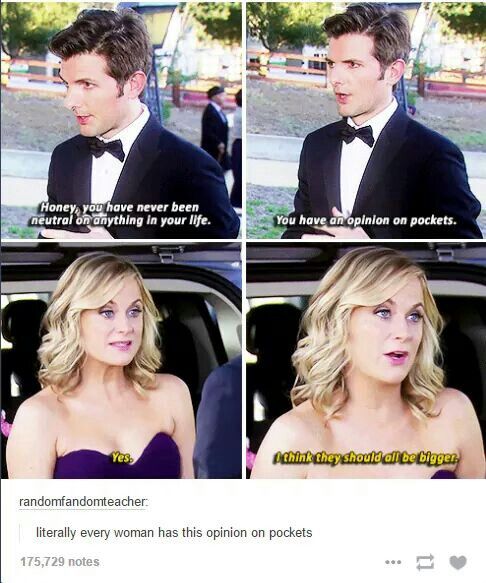
pockets

Watching women: an ode to the eternal inadequacy of pockets on women’s clothing
Or, Hey, how come the Western Canon is full of naked women taking naps in odd places.

The concept of the male gaze is a recent phenomenon, formally identified by Laura Mulvey in her article ‘Visual Pleasure and Narrative Cinema’ where she argues that the way that women are framed and represented in film reflects the desires of heterosexual men, rather than the reality of womanhood. But the male gaze has certainly been around since long before 1975, when Mulvey penned that essay. As Hannah Gadsby notes in her documentary Nakedy Nudes, the history of art is awash with women being watched—either by figures in the painting or the viewer of the painting itself—in various states of undress, often ‘prone, boneless and sexually available’, as artist Deborah Kelly puts it. The question of naked women in art is not about body shaming or sex shaming or kink shaming. It is about the underlying message that this sends to women: it is normal for you to be watched, for your bodies to be on display and consumed as an object.

Therein lies the difference: women are objects, while men are characters. The men in art history are philosophers leaning over books, soldiers on horseback, kings at court, but women are just naked. Not thinking, not doing, to the point where there is an overwhelming number of naked women in paintings who are simply unconscious. In an interview with The Guardian, Gadsby says that “The sheer number of paintings of unconscious women is distressing […] Most of those women are being watched by conscious men within the painting itself. And that’s normalising a very distressing thing. We see it a lot.” Yes, we see it in Twilight when Bella awakes to find Edward watching her sleep and doesn’t immediately phone the police. We see it in Sleeping Beauty (both the fairy tale and the 2011 thriller starring Emily Browning).

Women are aware of the warm, sticky presence of the male gaze. We have grown up in it, grown into it. It’s the reason why women slap on makeup to go to the shops, just in case they run into someone they know. It’s the reason my sister and I stopped making fart noises at each other in public, even though our brother still does (sometimes, not always, sorry Michael). It’s the reason fashion designers don’t put pockets on women’s clothes for fear that the bulge of keys or wallet would disrupt the silhouette of the clothing, which is designed not for function but for “how fabric best drapes the body”. The hint of keys or a wallet indicates a life, a person, which disrupts the fantasy of woman as body as object.

On one hand, the male gaze is simply an extreme objectification of women’s bodies. But watching can mutate into surveillance, which is not only about observation for pleasure, but for control. In their ‘Gendered Surveillance’ project, researcher Anja Kovacs, explores how the development of high-tech surveillance, for both private and governmental use, is inherently gendered and supports the mistreatment of women. They quote Richa Kaul Padte:

‘The constant and rigorous emphasis placed on the female body in societies across the world tells us two things: One, our bodies are something that we should hide, and paradoxically two, our bodies are something that are constantly on display. The presence of surveillance cameras in public or private spaces – hidden or otherwise – encapsulates this dichotomy perfectly. […] When it comes to spaces that tend to be male-dominated, your crime is the presence of your body, and the camera is, by extension, justified in capturing what you are supposed to hide’.

This sentiment is echoed in every case where a woman who has been the victim of a crime has been asked ‘yes, but why were you out there?’, perhaps with the addition of ‘alone’ or ‘wearing that’, if you want. Surveillance is a way of controlling women’s behaviour. Even catcalling, while seemingly harmless to those who don’t experience it, is a reminder that you are being watched, that you are visible, and you should act accordingly. Either by giving in to the catcaller, perhaps flashing them a smile, or by adjusting your behaviour to prevent such an incidence in the first place: covering yourself, hurrying your pace, or avoiding the area entirely.  

In my sister feather the gaze is materialised in the surveillance camera that sits smugly high up on the wall, and generates a loud buzzing noise when the women in the space don’t act appropriately. It’s a watched space that speaks not only of the limitations on the freedom of the incarcerated sister but also, in the stark juxtaposition between the prison and the remembered childhood, the way that life under the male gaze erodes the potential for intimacy, freedom and play in women’s lives.

But countering the male gaze, challenging it, will take more than acknowledgement and representation of its presence. We need to start actively retraining the eye to reframe the way we view women in the world. Liv and James Lew have indeed shifted the frame of my sister feather. The stage is in traverse, with audience on either side. Not only does this increase the sense of claustrophobia, enclosing the women between walls of watching faces, it makes the audience more aware of their complicity in surveillance. Watching theatre is, of course, an act of surveillance, and it is interesting to note how many women are undressed, brutalised or even simply sleeping on stage, and what that might be normalising. Certainly, it is an accurate representation of the violence many women (slash people) endure (everyone sleeps, we all know this). But presenting it live in front of people who are held back protesting or even reacting loudly by the niceties of theatre culture is a murky, sticky place (Fleur Kilpatrick wrote a wonderful essay on this earlier this year).

But traverse and in-the-round theatre not only engages the audience in surveying the characters, but also surveying each other. It makes the audience aware of the frame through which they are viewing the action at hand because they realise that they, too, are being viewed through that frame; an audience member seeing other faces watching the action or watching them will be constantly reminded of their own position as a watcher. This explodes the possibilities of perspective. In film, the lens trains the eye on what is important and completely controls the gaze of the audience, but in theatre, and then particularly in traverse theatre, the audience is aware that what they are seeing is inevitably different from the person sitting next to them, simply due to sightlines. In traverse, this is take to the extreme: when an actor turns away from one side, the other side will benefit from full view of their facial expressions. The audience will be forced to reckon with the idea that there will always be more to a story, to a person, than simply what they see; they only have half the story. This might seem frustrating to some audiences, but it is incredibly important in fostering a sense of empathy and compassion beyond what you see firsthand in someone. It is incredibly important in breaking through the 2D depiction of women as objects. You might not be able to see the keys in their non-existent pockets, but those women have keys, have lives, are people.

This is the second in a series of critical responses being published weekly on the VIMH blog by playwright (and assistant director) Fiona Spitzkowsky about the my sister feather rehearsal room.

part one: phallacy of dramatic action

medea

The patriarchy has a lot to answer for.

That’s it, end of essay.

——

For those who need more proof:

The tentacles of patriarchy curl around, into, through so many aspects of our lives. It is so pervasive that it often goes unnoticed, unchallenged; if there’s an elephant in every room, you stop seeing it as unusual, it’s part of the furniture and getting rid of it would mess with the interior design.

Our world is built around patriarchal structures—structures that position the cis-het white man as ‘normal’, as the default setting, and all others as, well, ‘other’. These structures are slowly, very slowly, being dismantled, but even to chip away a little bit requires herculean effort (or perhaps Medean effort? She overcame great obstacles and killed her own children out of jealousy, too, right? But she’s a villain and Herc’s a hero. Thanks Patriarchy). At times challenging the patriarchy can seem like clearing a veggie patch: you clear the surface weeds, plant and tend to your veggies, only to discover that beneath the surface the earth itself is choking with couch grass, anything you plant will suffocate. You need to dig the whole patch up and start again.

Storytelling is a key feature of the socialisation of human beings, a founding stone in the construction of civilisations throughout history and across the globe. Storytelling is ‘cognitive play’, a way of training a lively mind. It rewards intelligence, encourages pattern-seeking and creates a framework of expectations and empathy through which the world is filtered and understood. And yes, the patriarchy is all over that business.

Representation in storytelling is a vital part of dismantling dominant ideologies like patriarchy and colonialism. It shakes the central pedestal of maleness or whiteness, presents alternative perspectives that should never have been considered ‘alternative’, and demands empathy for the people who have often been denied it under the harsh gaze of an oppressive dominant ideology. The representation revolution is starting to build momentum; stories focused on the lives of people of colour, women and LGBTQI people are flying off the shelves at bookstores, breaking cinema box office records, winning Oscars and selling out mainstage theatres (though the straight white man still dominates).

But the patriarchy has dug its roots deep into the tradition of storytelling; it has narrowed our engagement with narrative form, the way we structure our stories and interpret various interactions of people-as-characters. As phallocentric—shall we say phallobsessed— as the patriarchy is, you don’t have to be the Principal Lecturer in a department of Literature, Language and Theatre to see that the narrative form dictated by the dicks* in power seems eerily similar to the form of the male sexual encounter (or at least the concept of the male sexual encounter that has been deemed accurate and appropriate by patriarchal society).

But don’t take my word for it, here’s Harry Derbyshire, Principal Lecturer in the Department of Literature, Language and Theatre at Greenwich University, who describes Western drama as a product of patriarchy: ‘its linearity, its drive towards certainty and a single climax, reflect male priorities and experience, and the point of view which the audience is encouraged to adopt is mostly – some would say always and necessarily – a male one’. And don’t take Derbyshire’s word for it, either. Hélène Cixous, in her spinetingling essay ‘The Laugh of the Medusa’, asserts that ‘writing has been run by a libidinal and cultural—hence political, typically masculine—economy’.

You can take Cixous’ word for it. It’s solid.

Derbyshire’s statement comes from an essay about Caryl Churchill, and he goes on to detail exactly how many fucks Churchill gives about phallocentric narrative structures (hint: none). Just as we as a society are starting to openly acknowledge that sex doesn’t have to be about a single male orgasm, storytellers and theatre makers are escaping the confines of linear narratives that build towards a single climax. Far Away, Churchill’s masterpiece (don’t @ me, I don’t even have Twitter), demonstrates the power of rejecting patriarchal narrative forms. It is a story of individuals as tiny cogs in a massive machine of death and destruction, sustaining the machine through denial and apathy. It is a stunning portrait of the banality of evil, and the absurd place that the logic of hate leads to. But it’s not only the sharp, efficient dialogue and precise characterisation that convey these ideas; the overall form drives it all home. The play is unevenly paced and has a disjointed timeline, there is no peak in dramatic action, and there is no real ending, just a trailing off. The play contains moments that would traditionally be turning points—moments of tension, violence and destruction—but the play rolls on ever on, crushing these moments like a tank crushing a body as it trundles down the road. The dramatic action peaks but offers no release in that moment; no rolling over, wiping yourself down and going to sleep. Far Away embodies a sustained apathy, and in that apathy a unique urgency that demands far more of its audience. And arguably, it reflects the world more accurately than more conventional (read: patriarchal) forms of narrative.

In the real world, the people in charge of the global narrative (politicians and corporations) seem to firmly believe that the world is still in the early stages of its ‘Hero’s Journey’; everything is about growth, growth and more growth ad infinitum, because if we ever stop pushing towards that climax, it means that our story is almost over. But now even economists admit that this narrative is a fallacy (phallacy) and our obsession with growth destructive. We all know that our lives are more than a single trajectory, a single storyline that reaches a peak and then settles. The world, as they say, keeps on turning; the end of growth, a climax, isn’t the end of the story. Sustainable living, and storytelling, doesn’t rely on growth or ever-building action. It allows itself to slow, to explore the full possibilities of a single point on the horizontal axis, rather than always looking to climb vertically.

Greta Gerwig’s Oscar-nominated film Lady Bird is a perfect example of storytelling that resists patriarchal forms. Not only does it embrace the female gaze, with Lady Bird always appearing as an active figure in the frame, rather than an object to be gazed at (that role is reserved for her male love interests), it also rejects the idea that a life is dominated by a single narrative thread, all building towards a single climactic event or moment. The film is like a cross-section of Lady Bird’s world, we see glimpses of the complex lives intertwined with hers—all stories that seize our attention and imagination, all impossible to explore to their full extent in a mere 93 minutes. We are given brief windows of triumph and melancholy. The priest at the hospital, the father and son interviewing for the same job; these moments are loaded, bursting with ideas and emotions threatening to spill out and swamp the storyline we’ve been following, but Gerwig snatches us away as the world keeps turning and we are left marvelling at the great web of people in this place. Everyone has a story worth listening to, but few are afforded the time or attention. It is a gentle, yet brutal, way of storytelling, a reminder that in reality nothing ever has a happy ending because nothing ever really ends. The films closes with a sharp inhale (no spoilers, but if you haven’t seen it yet you should). We are left with the endless tumultuous possibilities of Lady Bird’s life, her complex relationship with her mother and her self.

Describing my sister feather, Liv once said that the climax of the play happens in the first fifteen minutes, hits the stage like a plane exploding, and the rest of the play is watching the ash slowly fall from the sky. Like Lady Bird, the play explores the breadth of a moment, of a time and a place, resisting the impulse to push things forward towards some impossible resolution. The characters themselves feel that impulse; to sit and let things settle would mean looking out beyond their immediate surroundings, the immediate narrative and objectives, to see the sadness and loss that has followed them their entire lives. It takes time for Egg and Tilly to break free of the structure put in place for them, the narrative, the push towards finding meaning through closure. There is no such thing as closure in the real world—the break-up talk is never going to feel like enough, the apology after an argument never really heals the wound.

They play and dance around the sadness, speaking, lying, squirming away from each other because they want an ending, a resolution, but they know that the stillness and sadness will open, not close, so many doors. But slowly, gently, through Liv’s quiet and considered script, they shake it off, sit quietly and let the past settle, like feathers, around them. Perhaps ‘dramatic action’ is lost, but who decides what makes action dramatic? The shrinking space between the bodies of estranged sisters is alive with drama, just not the kind we’re used to seeing on stage and screen.

Thankfully our stories are changing. Not only are the voices and faces starting to reflect the full breadth of our communities, but the way we tell those stories is shifting. We are not satisfied by the single-climax experience, and we’re demanding more.

Deny the phallacy. Sit with the sadness. Let the feathers settle. See what (doesn’t) happen.

—-

*as in bad people, not all enforcers of the patriarchy have penises.  

This is the first in a series of critical responses produced by playwright (and assistant director) Fiona Spitzkowsky about the my sister feather rehearsal room. Keep an eye out for these weekly installments.

the puppet regime by georgie harriss

Beetroot - moodyHi readers!
The Puppet Regime (a title I’m growing to hate) started life as a screenplay back in 2015 and has been struggling to find its rhythm ever since. People who read the screenplay agreed that it was far too claustrophobic for the screen, and its conversion to a stage play has been troublesome at best.

My piece strives to be about a lots of things – perhaps too many things. It’s about what it
means to govern in a world that is continuously stripping power from government. It’s
about whether stagnation, to the elimination of conflict, is a type of progress. It’s about
preservation and hoarding and the lengths we go to for stability. It’s about masculinity and power. About what it means to change ourselves for the people we love.

It wasn’t until an afternoon of procrastination lead me down a Wikipedia rabbit hole that I came across Nietzche’s theory of The Last Man. These “last men” are described as risk averse and seek only comfort and security. This is a perfect description of my protagonist Boris, who believes potential should never be realised and power should be possessed not wielded. It got me thinking about whether a dictatorship that doesn’t actually seek to dictate is of any relevance to anyone. At this point I’m still not sure.

I created this world with a lot of absurd logic (that makes no sense) as well as with reference to a few real events and many imagined ones. I thought about gender imbalances, particularly real world examples of male surpluses due to population control and male supremacy, as well as female surpluses created by wars revolutions. What would happen if a male-governed country became completely female, and the government’s plan of attack was to quietly phase itself out? Could a ruling family become obsolete without being seen as a threat? Could they organically make the transition from tyrannical overlords to harmless figureheads?

In my play we have this museum of a regime whose historical link to power has just died. You know how everyone’s afraid that if the queen dies the royal family won’t have the same appeal? They won’t make a return on all the tax payer $$ that goes into maintaining Buckingham Palace – The National Trust won’t pick up the slack. I digress. We introduce our only female character to the play, because ironically, she’s the only one with the skills to maintain the current state of affairs. This is where things get messy for me: is it really a good idea to write a play that is mostly about women, yet only write one female character? Is that being responsible as a writer? Every time I have to write 1F, 3M on an application I feel dirty. What’s more, she’s not a huge talker, and her lines end up being spoken by a male actor anyway. Gross right?

Anyway, this female character’s journey sees her slowly immersed in male privilege, as she is forced to become more and more masculine on her quest to simply exist. Maybe it’s a similar predicament to white feminists of the world, but that’s the danger of writing a play that only has one female character. Is there a way to remind an audience not to view one character as the representative for a gender?

I am going to stop writing now!

Thanks so much to VIMH for this opportunity – I’m beyond excited to hear my words read aloud in the presence of generous, creative minds.
Georgie xx

Georgina Harriss is a Melbourne-based writer specialising in screen and theatre. She holds a Bachelor of Fine Arts in Screenwriting from The Victorian College of the Arts, where she majored in comedy writing. In 2016 her playlet The Best is Yet to Comewas featured in Red Stitch’s annual showcase: Playlist.Georgina was subsequently offered a playwriting residency at Lonely Company and her work was chosen for inclusion in the inaugural Betafest: Theatre in Various States of Undress. In January 2018 her play Love Bird ran as part of The Butterfly Club’s summer curated program. 

quite drunk, very jesus-y by grace de morgan

No rest for the wicked. Two dinner and shows a week apart and we are READY. Our next writer is the wonderful Grace de Morgan, who reflects here on the intersection of faith, politics, and friendship. 

A week out from doing this play development, I’m feeling quite nauseous. Postal
votes have gone out and my Facebook feed is flooded with impassioned status
updates entreating people to vote yes. I’m a proud ‘Yes’ voter. I’m also a
Christian. And while I have many friends of faith who are in a similar position
and view same-sex marriage as a clear social justice issue, I suspect many of the
people I went to my Anglican youth group with do not feel the same.

In my experience, these friends are not bad people. My understanding is that
they are trying to do what they think God would want. And for many that means
standing up for marriage (…even though Jesus himself did not seem that
concerned with the whole notion, let alone a historically specific ideal of it). My
concern is that these same friends do not realise they are sharing the same side
as the people who repeatedly called my gay friend a ‘faggot’ throughout high
school, the same people who spat on another while he exited Stonewall, the same
people who catcalled my lesbian friends when they held hands in the street. I
know these friends would never condone these actions, but – with or without
intention – their ‘No’ vote helps foster an environment where homophobia can
continue to exist and be downplayed.

Had the postal vote been rolled out when I was 19, I’m not sure I would have
voted ‘Yes’ either. My world was smaller and I had not yet met three of my
favourite people — I had not made chaotic theatre with him yet; we had not
drunk bad organic wine while watching ‘Black Books’ at 1AM yet; she had not yet
given me the best advice of my life while I cried over a boy who didn’t and would
never love me back.

I had not yet heard their coming out stories, how certain families had to ‘get used
to’ the idea while others flat out rejected those they claimed to love. I had not yet
heard stories of internalised shame, of not wanting to draw attention to
themselves out of fear, of praying the gay away.

In the words of comedian/actor Hannah Gadsby, “Children aren’t meant to be
shamed.” However, my teenage understanding of faith compelled me to hold

church values above all else, to think that by sticking to specific principles I
would shine like a city on a hill and thus be a ‘good Christian witness’. Yet now as
an adult I stand away from that tradition, in a more contextual and progressive
understanding of the Bible. It is now – more than ever – that I feel compelled and
in awe of the Jesus of the New Testament. It’s this figure that I have faith in, the
man who was friends with sex workers, lepers and tax collectors over the rich,
religious and respectable. It’s this faith that compels me to actively advocate that
we not shame people for being who they are, to love others as I myself hope to be
loved.

I don’t claim to know what is in God’s heart of hearts, but I do not think a god of
compassion would want any queer people to be contemplating taking their own
lives rather than love the people they love. And if that sounds extreme, it’s
because it is. According to statistics by LGBTI Health, LGTBI people are five times
more likely to attempt suicide over the general population. In young people aged
16 to 27, that is 16% of LGTBI young people in comparison to 3.2% of the
general population.

‘Quite Drunk, Very Jesus-y’ is the play I wish my 19 year old self could have seen.
Despite not coming from a Christian family, I started going to an Anglican youth
group when I was 13 or 14, mainly so I had an excuse to be around my beautiful,
Jesus-loving sister. Smash cut to years later, after countless Bible studies, church
camps and Sunday nights of praise & worship. What I had was a greater
understanding of the Christian faith, some very good friends, a tonne of great
memories, but also a lot of questions about the conservative Anglican culture and
where faith and culture deviated. I was a naturally outspoken girl with a curious
mind and for a very long time I felt deep shame about that. (And to be honest, I
still do sometimes.)

I wouldn’t wish needless shame on anyone. It is a light-killing, energy-sapping
parasite that claims to do good while depleting you from the inside. If I was
anxious about being kind of weird and opinionated, I can only imagine the self-
loathing of faithful friends who had ‘fallen away’ more visibly.

I’m lucky (even blessed?) that I’ve maintained friendships from those youth
group years, that I don’t live in an echo chamber, that I’ve only had to unlearn a
quarter of what I was taught. However throughout time, as our lives have taken
different directions, many of those close friends and I have had to navigate
whether we’re just friends because we have history or because there’s
something deeper.

The thing is, I am my politics. But I am my friendships too. And when those
things don’t connect like snug puzzle pieces, there’s a cognitive dissonance that
requires resolving. This play is my dramatisation of that wrestle, an aspirational
thought experiment on what would need to happen for those friendships to
flourish, a story about friends whose politics are different, but who claim to have
the same faith.

So, long story short, that’s what ‘Quite Drunk, Very Jesus-y’ is about. (That and
getting drunk with your best friends on your 30 th while dancing to Fat Man
Scoop.)

KateDisherQuill_GraceDeMorgan_BESTGrace De Morgan is a freelance writer and playwright. She is currently doing a Wheeler Centre Hot Desk Fellowship and is under commission with Penguin Random House. She has written for ATYP, Bondi Feast, Good News Week, Junkee,news.com.au, Old Fitz Theatre, Playwriting Australia, Seizure, the Sydney Morning Herald and The Roast. You can find more of her work at gracedemorgan.com