come and join me

Will CrawfordA bunch of weeks have flown by since February 1 and they are a flurry of memorable moments that are more than likely couched in mundanity. This is how life goes on though, right? Sizzling along with a brief flash in the pan here and there.

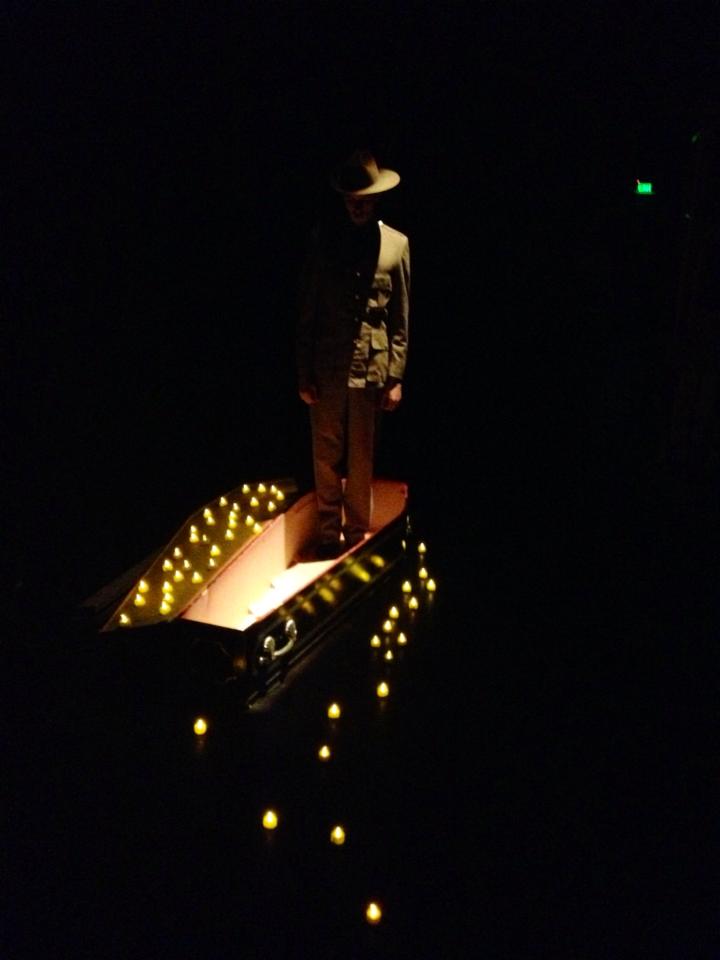
Then, every once in a while, the sublime creeps upon you, quietly. This photo is of that moment, that moment of sublime that lifted me out of the day-to-day slide

When I last wrote in this space, I was playing around with an idea that I’d pitched to Performance Space about making a short work literally inside a coffin. The idea was accepted for their Nighttime: Live and Let Die program and Lana Costa, Tom Cocquerel and I were suddenly facing a fortnight deadline to make what we’d envisaged.

This experience was utterly new to me. I’d never worked to such a tight deadline. I’d never worked, I realise now, in such a truly collaborative way. And I’d never reached the day of the performance so uncertain about whether the work would be a disaster or not. A couple of nights before the show, I experienced a very real revelation which, as is always the case with self-evident truths, I had thought I had understood but had not actually grasped until I was living it. Sleepless, wondering whether we could pull this extremely risky idea off, I got slapped in the face with this: it would either work or it wouldn’t. It was as simple as that. And with this I realised the importance of releasing myself from the desire to ‘get a hold of’ what I was making; essentially, I realised I had give up my desire for control.

Lana pitched the idea of a WWI soldier, which gave us a very strong access point for the idea of being buried with your decisions (as all soldiers given a military funeral were buried in their uniforms). Together, the three of us created a character, William Crawford: grew up in Brisbane, joined the Light Horse to see the world, trained in Egypt, fell in love with a prostitute in Cairo called Anta, injured in Gallipoli, died of infection on the boat back to Egypt, buried outside the training camp, Mena.

Seven days after he has died, he wakes up in his coffin. There is a bottle of Anta’s perfume in his breast pocket. Which means, what? That she travelled from Cairo when she heard that he was dying? That she loved him?

By the time of the performance, our conceit had evolved to this: you are buried with the smells of the most important moments in your life. It was meant to be a question, for the audience, of what they want these smells (choices) to be.

It was risky because Tom, as Will, was set to engage with the first person that he saw and start a conversation with them through which, ideally, his story could come out as an explanation to that person about the importance of making your own choices. During this conversation, it was hoped that some of the rest of the audience, who were meant to be milling around, would come up and watch this exchange.

Everything was literally out of our control. We got the coffin on the day of the show to practice in. We got that stunning lighting state an hour before it opened. At the last minute, the curator decided that the whole audience should watch our piece first rather than mill around.

So what we expected to maybe be a crowd of 20 witnessing this ended up being around 85 people sitting and standing around Tom, watching him have this conversation with a girl sitting by the foot of the coffin.

This picture that you see to the right, this show, is the closest that I’ve ever come to making onstage what I can see in my head. And there was basically nothing that I did that brought that about.

The arbitrariness of the universe, right?
Step into my coffin. I’ll show you around.

chessI’m in the thinking stages of making a show about what it might be like to wake up in your own coffin. Writer Ellana Costa and I want to look at the hard reality of ghosthood. What if you were a ghost with limits? What if you couldn’t defy gravity or boundaries but were stuck for eternity inside a wooden box?

Performance Space (a theatre company based at Carriageworks) are running a short work evening at the beginning of March called ‘Nighttime: Live and Let Die’ and to apply to be a part of it you had to pitch an idea around the themes of death, night, dreams, ghosts, rebirth, etc. Coincidentally, I saw a performance two days before the application was due in which a man dreamt that he had died and yet was awake in his coffin. The avalanche this scene set off in my head resulted in this pitch (I’ll spare you the artistic masturbation and just give you the broad outline):

“Step into my coffin. I’ll show you around.”

Tom has just woken up as a ghost. He’s in his coffin and is surrounded by objects. The only problem is, he can’t make sense of them. What is so important about that whistle? And why is there a bible underneath his pillow?

come and join me’ is about the disconnect between how we are seen by our loved ones, and how we see ourselves.

If an audience member gets close enough, Tom will ask them to step into his coffin and help him work out why he’s been buried with a bible, and why he’s wearing a Ramones T-shirt.

When we are grieving the loss of a loved one, we bury them with objects symbolising who they were to us, but perhaps not to them. What if you never told them what you loved about them? Or what if you loved the part of them that they despised?

‘come and join me’ is also about the inexplicable choices we make in life – why we choose to learn the clarinet instead of the oboe, or to be a novelist rather than a dancer. Buried with the objects that mark these choices, we are faced with an eternity of contemplation.

The possibility that I’ve now realised, which I should have put in the application, is this: what if a ghost was given a chance to explain their chest-pieces?

Chest-pieces is an idea I had a while ago that runs vaguely along these lines:

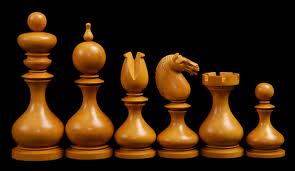
What if every sternum was a door that you could swing out to reveal the six precise memories that have had the most formative influence on a person? What if you could reach your hands inside and take them out, one by one, and roll them between your fingers? I imagine that these six memories would be concentrated, like juice, to resemble something like chess pieces that you can roll around in the palm of your hand. Imagine if you could handle the chest-pieces of another person to discover who they were, rather than trying to negotiate the said/unsaid of language (and our heinous ability to understand our own selves and then communicate that understanding) […] What if these six pieces were lined up before you the moment that you died?

The trouble we have with being alive is that our lives are spooling out like thread – this thread will continue to spool until it runs out. Obviously, this is not really a problem, but the one thing we are denied with death is a definitive line-up of those six chest-pieces, those six moments that you could place in the hands of another human to make them understand how and why you lived your life.

BUT. What if you were a ghost? You would no longer be living. Your thread would have stopped spooling. But you would have your six chest-pieces. And you’d be able to hand them to somebody and make them understand what you lived for, maybe what you died for.

I guess the challenge for Lana and I is to work out how to minimise the elephant tread of language in this imagining.

rian

RianI went and saw Rian last night for Sydney Festival.

“Joyous and exhilarating, the latest creation from Irish dance company Fabulous Beast is a thrilling evening of music and dance.

For this internationally acclaimed work, director and choreographer Michael Keegan-Dolan collaborates with composer Liam Ó Maonlaí of Hothouse Flowers, drawing inspiration from Ó Maonlaí’s 2005 solo album Rian (‘mark’ or ‘trace’  in Gaelic).

In a dynamic celebration of Ireland’s roots and traditions, Celtic sounds are mixed with elements of West African music, as eight dancers  from around the world unite with  five of Ireland’s top musicians.

There is reverie and release as the music propels the dancers across the stage, empowering them to make their mark.”

I have no words. Last night, I finally realised my failure in being able to express myself only through language.

What I saw on stage was magic. Not kitsch-card-trick magic. Real magic. Real Gaelic magic.

The music made my bones vanish.

And the dancers. One vignette may suffice: a skinny woman in a green shift with short hair, rolling her body through the air like her joints were ball-bearings. And she smoked a cigarette the whole time.

superhuman

Image
Sometimes the internet is a blessed thing. Of course a Tumblr blog entitled Cats That Look Like Pin Up Girls exists.

Yesterday I saw two shows at Carriageworks as part of Sydney Festival: It’s Dark Outside and Othello C‘est Qui.

Othello C’est Qui‘s blurb:

“Of all the roles for black actors in the western world, Othello is by far the most powerful and legendary. Yet Shakespeare’s famous Moor is barely known in Africa.

Across this cultural divide, Ivory Coast-born performer Franck Edmond Yao and German actress Cornelia Dörr unite to interrogate the confrontational world of Othello and Desdemona. Sharp, political and sensual, Othello c’est qui (Othello who’s that) is a liberating exploration of cultural clichés and boundaries.

The actors reveal their distinctly expressive playing styles as they parody traditional Othello performances with candour. Together they pull apart themes of colonialism, migration, religion and politics in an urgent, seemingly improvised way.

This award-winning production creates a tough yet moving portrait of prejudice and the theatre itself.”

The moment that crystallised this production (aside from the stunning performance itself) were the two women sitting in front of us in the audience. Theatre etiquette should be pretty easy to follow – minimise auxiliary sound production, engage with the performers, etc. Not only did these women bring hot chips (one in tupperware, the other in extra-crinkly foil), they also brought extra gassy soft drink, which sighed quite loudly every time they opened the bottle, and turned their phones on to check they were on silent (ensuring that nice warm Nokia welcome note rang out).

This, however, was only a prelude. At the end of the show they both got up to leave and one of the women turned to the other, leant over, and said:

“I think Othello must be about jealousy. Yes, that must be why they referenced it so much.”

When I recounted this vignette to my Dad, rather than being amused he turned to me and said something along the lines of the following. He said that he’s never understood how Mum, Amy, and I can go and see so much theatre, and not be superhumans. I was gobsmacked.

Just take the two shows we saw yesterday: one was intensely moving and the other provoked ideas about performativity and race that had never occurred to me. Why am I still this same person? Surely they pushed my mind and stretched my heart out by its ventricles? Why am I not better today than I was yesterday?

it’s dark outside

ImageThis evening I saw It’s Dark Outside, which is currently showing at Carriageworks as part of Sydney Festival.

“From the creators of multi-award winning production The Adventures of Alvin Sputnik: Deep Sea Explorer comes this heartfelt adventure of an old man wandering into the wild.

As the sun sets he is swept up in a surreal western, on the run from a mysterious tracker hell-bent on hunting him down. The world around him crumbles, revealing that he cannot hide from everything.

Created and performed by Tim Watts, Arielle Gray and Chris Isaacs, this exploration  of dementia is told through puppetry, mask, animation  and live performance with  a haunting score from Rachael Dease.”

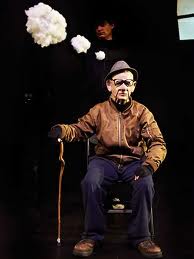
The effect of the puppetry was sublime. Dementia is an illness that hollows out many families – the people I was with had all had a grandparent who suffered from it and the tears from those around us well attested to its pervasiveness. But the presence of the puppets meant the agony of direct confrontation was suspended. We did not have to sink under the weight of recognition – there were no ‘humans’ onstage for which we could substitute our own grandparents/loved ones, whose minds have become cotton wool.

Lesson learnt: never underestimate the power of cotton wool. As the old man slowly lost his grip on the world, the puppeteers, dressed in black, would pull out small cotton-shaped clouds from behind his head, which would then waft across the stage as he desperately fought to catch them back. With the black background, the puppeteers all but disappeared, leaving these soft white clouds floating across the stage as this old man lost his mind.

The lack of language in this show was intensely inspiring. I suspect it could be watched almost anywhere in the world and much the same reaction would be suckerpunched from the audience. The only words came from Rachael Dease’s stunning score. The rest was movement and image, plain and simple (I’m sure it was incredibly complex but it felt like it had been concentrated for the audience from a frenzy of possible gestures down to a quiet exactness, wringing pathos out of each moment without soliciting sympathy or risking alienation).

I saw more grown men crying after this show than I think I have ever seen before. It’s on for a couple more days. Don’t miss it.