i died for beauty

I died for beauty, but was scarce
Adjusted in the tomb,
When one who died for truth was lain
In an adjoining room.

He questioned softly why I failed?
“For beauty,” I replied.
“And I for truth – the two are one;
We brethren are,” he said.

And so, as kinsmen met a-night,
We talked between the rooms,
Until the moss had reached our lips,
And covered up our names.

Emily Dickinson, 1924.

Step into my coffin. I’ll show you around.

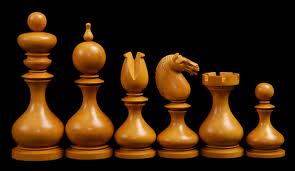
chessI’m in the thinking stages of making a show about what it might be like to wake up in your own coffin. Writer Ellana Costa and I want to look at the hard reality of ghosthood. What if you were a ghost with limits? What if you couldn’t defy gravity or boundaries but were stuck for eternity inside a wooden box?

Performance Space (a theatre company based at Carriageworks) are running a short work evening at the beginning of March called ‘Nighttime: Live and Let Die’ and to apply to be a part of it you had to pitch an idea around the themes of death, night, dreams, ghosts, rebirth, etc. Coincidentally, I saw a performance two days before the application was due in which a man dreamt that he had died and yet was awake in his coffin. The avalanche this scene set off in my head resulted in this pitch (I’ll spare you the artistic masturbation and just give you the broad outline):

“Step into my coffin. I’ll show you around.”

Tom has just woken up as a ghost. He’s in his coffin and is surrounded by objects. The only problem is, he can’t make sense of them. What is so important about that whistle? And why is there a bible underneath his pillow?

come and join me’ is about the disconnect between how we are seen by our loved ones, and how we see ourselves.

If an audience member gets close enough, Tom will ask them to step into his coffin and help him work out why he’s been buried with a bible, and why he’s wearing a Ramones T-shirt.

When we are grieving the loss of a loved one, we bury them with objects symbolising who they were to us, but perhaps not to them. What if you never told them what you loved about them? Or what if you loved the part of them that they despised?

‘come and join me’ is also about the inexplicable choices we make in life – why we choose to learn the clarinet instead of the oboe, or to be a novelist rather than a dancer. Buried with the objects that mark these choices, we are faced with an eternity of contemplation.

The possibility that I’ve now realised, which I should have put in the application, is this: what if a ghost was given a chance to explain their chest-pieces?

Chest-pieces is an idea I had a while ago that runs vaguely along these lines:

What if every sternum was a door that you could swing out to reveal the six precise memories that have had the most formative influence on a person? What if you could reach your hands inside and take them out, one by one, and roll them between your fingers? I imagine that these six memories would be concentrated, like juice, to resemble something like chess pieces that you can roll around in the palm of your hand. Imagine if you could handle the chest-pieces of another person to discover who they were, rather than trying to negotiate the said/unsaid of language (and our heinous ability to understand our own selves and then communicate that understanding) […] What if these six pieces were lined up before you the moment that you died?

The trouble we have with being alive is that our lives are spooling out like thread – this thread will continue to spool until it runs out. Obviously, this is not really a problem, but the one thing we are denied with death is a definitive line-up of those six chest-pieces, those six moments that you could place in the hands of another human to make them understand how and why you lived your life.

BUT. What if you were a ghost? You would no longer be living. Your thread would have stopped spooling. But you would have your six chest-pieces. And you’d be able to hand them to somebody and make them understand what you lived for, maybe what you died for.

I guess the challenge for Lana and I is to work out how to minimise the elephant tread of language in this imagining.

what do you say to death?

collingwood

Fifteen days ago my uncle died.

He was in a car accident and his chest collapsed. For reasons still unknown, they could not operate as his blood would not clot and he was dead within 24 hours.

All I could feel was a sense of total absence.

The man that I had only really started getting to know halfway through last year no longer existed.

He was a real outback kind of guy.

Hard in a no-bullshit, rock-climber, mine-manager kind of way.

He’d been bitten by snakes so many times he was immune to anti-venom.

He was a diehard Collingwood fan.

He didn’t eat vegetables.

He was a serious smoker.

He was a gentle giant who in his retirement lived on Mount Tambourine with his partner, my aunty.

He worked on their massive back yard, building a rock-climbing wall in his shed, a big birdcage for their zebra finches, and a pen for their chooks.

He drove my sister and I the hour-and-a-half trip to the Gold Coast airport after our stay with them.

He called my aunty ‘Poss’.

When I heard that he’d died all I could think about was my aunty. He was her everything. They’d never had kids and had lived all over Australia, following John’s mining placements. And he was gone. A whole had been ripped into halves.

I only have a shadowy understanding of grief. My grandfather, my idol, died in 2006, and I still think about him everyday. But it was with John that I began to sense the shock of sudden death, of having your ribcage yanked out and being told that it no longer belongs to you.

The thing that I am ashamed of and which fills me with wonder is how quickly the world reasserts itself. The shock knocks out your focus, holding you in the merciless grip of remembered images, remembered words. But almost instantly your focus starts to shift back: objects refill with colour and weight, something makes you laugh, you have a conversation with someone who doesn’t know what’s happened and who you decide shouldn’t be dragged down with the details.

I’ve realised that language has not been designed to cope with death. The sheer nature of it is a ‘filling-up’; you fill up space with words, often to avoid the yawning, threatening, exhilirating emptiness of silence.

Is this why we flounder with the bereaved? What language could approximate their loss, could capture the absence of their other half?

Perhaps this is where our bodies really do come into their own. Language fails in the face of death. But you still want, desperately, to help the one left behind, to help them start stitching up the one half left. And so you hold them. A hand on the shoulder, back, knee. A hug. An encouraging, useless smile. Open arms.

What else can you do?

Funnily enough, I think one man has managed to capture grief with words, which my aunty put on the funeral service sheet:

Stop all the clocks, cut off the telephone,
Prevent the dog from barking with a juicy bone,
Silence the pianos and with muffled drum
Bring out the coffin, let the mourners come.

Let aeroplanes circle moaning overhead
Scribbling on the sky the message He Is Dead,
Put crepe bows round the white necks of the public doves,
Let the traffic policemen wear black cotton gloves.

He was my North, my South, my East and West,
My working week and my Sunday rest,
My noon, my midnight, my talk, my song;
I thought that love would last for ever: I was wrong.

The stars are not wanted now: put out every one;
Pack up the moon and dismantle the sun;
Pour away the ocean and sweep up the wood.
For nothing now can ever come to any good.

W.H.Auden
sun

Several events have run into each other, vein-like, in the past handful of days. There is no way to sieve them into a comprehensible pattern.

1. My uncle was in a car accident last Tuesday night and his chest collapsed. He’d been bitten by a tiger-snake but was immune to the anti-venom (having been bitten so many times. He was one of those men who truly make sense in the Australian outback.) He died on Wednesday afternoon. I cannot yet understand such sudden absence. It’s like someone did the trick of whisking the tablecloth away but they took any sense of stability instead.

2. I found out I can fly. Or, rather, I found out I can fly down a single flight of stairs. On Friday night, in Kings Cross Hotel, my shoe got caught on a stair-lip. It serves me right as I had just been smiling at a highly inebriated man trying to walk past me up the staircase. Rather deftly, I managed to break my fall not with my hands or arms but with the right side of my face. My Dad, who used to be a doctor, has been making jokes about me not being a paraplegic right now (which worries me, as he is always serious about potential catastrophes, in a hyperbolic sort of way, which makes me think that I may well have come off much worse than I did). Luckily, X-rays show that my skull is intact. The skin covering it is just a bit purple/yellow right now.

3. A very dear friend from school came over on the weekend and we started brainstorming for a collaborative project. We’ve always wanted to work together and whilst throwing ideas around I felt like I was being swept up within the vortex of something that’s going to continue spinning for far longer than I can either anticipate or predict.

These three moments stand out to me like braille. I don’t know what they mean beside each other. I’m sure nothing. But I’m also sure that I’ll be unable, inevitably, to accept the rule of random events, of arbitrariness, and my mind will make these moments porous, will make their individual significance, or lack thereof, leak into each other.

rendezvous

I have a rendezvous with Death
At some disputed barricade,
When Spring comes back with rustling shade
And apple-blossoms fill the air –
I have a rendezvous with Death
When Spring brings back blue days and fair.

It may be he shall take my hand
And lead me into his dark land
And close my eyes and quench my breath –
It may be I shall pass him still.
I have a rendezvous with Death
On some scarred slope of battered hill,
When Spring comes round again this year
And the first meadow-flowers appear.

God knows ’twere better to be deep
Pillowed in silk and scented down,
Where love throbs out in blissful sleep,
Pulse nigh to pulse, and breath to breath,
Where hushed awakenings are dear…
But I’ve a rendezvous with Death
At midnight in some flaming town,
When Spring trips north again this year,
And I to my pledged word am true,
I shall not fail that rendezvous.

Alan Seeger. 1888–1916